

Part One of Out of the Cave: Reflections on Healing, Presence, and the Human Experience of Cancer
Drawn from the wisdom of Dr. Cobie Whitten — inspired by Plato’s Allegory of the Cave
Cancer has a way of pulling people out of the ordinary story of life. It interrupts, unsettles, and asks questions most of us are trained to avoid: What matters now? Who am I when certainty is gone? How do I live in the presence of fear?
This series, Out of the Cave, traces those questions through reflections drawn from the wisdom of Dr. Cobie Whitten — a clinician and retreat guide whose work straddles the medical, emotional, and spiritual realms of healing. The series title and central metaphor are inspired by Plato’s Allegory of the Cave, found in The Republic (Book VII). In that classical image, prisoners confined in a cave see only shadows on a wall and believe them to be reality — until one is freed and discovers a fuller world beyond the darkness.
This first reflection begins at the threshold: the moment people step out of the “cave” of ordinary life and into a space where truth, presence, and possibility can begin to breathe.
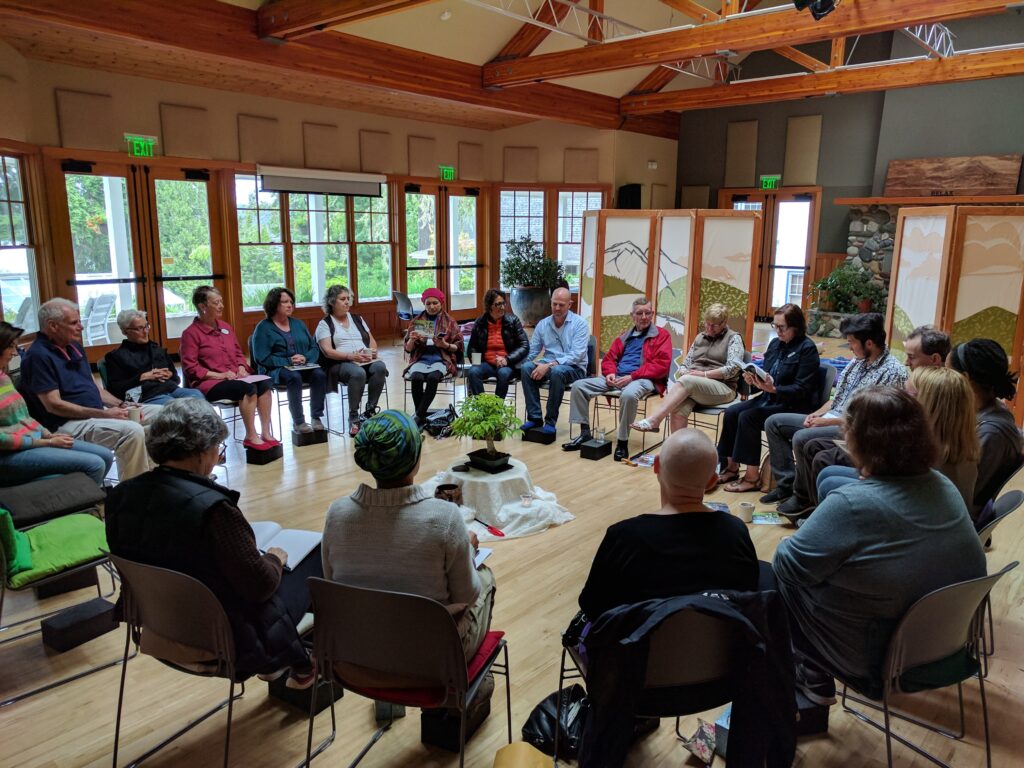
What Happens at Retreat
“There is something extraordinary that unfolds over the course of a three-day retreat that is just not possible in a clinical setting.”
Dr. Whitten describes transformation not in metrics, but in the body. Over three days, something visibly changes. Frozen faces soften. Breathing deepens. Eyes begin to communicate again—“connection, love, support, ease.”
“We create a safe supportive setting where participants are invited to let go of obligations and chores and just be.”
This is not merely respite. It is a cultural shift. Retreat creates a world that operates by different rules:
- No unsolicited advice
- No pressure to project manufactured positivity
- No requirement to make others comfortable
“We do not tell participants that ‘it is all going to be ok’—a message they get far too often from well-meaning loved ones and friends.”
In the outside world, people living with cancer are frequently asked—implicitly or directly—to reassure others. To stay brave. To soften the discomfort of those around them. Retreat removes that burden.
Accelerated Authenticity
Dr. Whitten recalls her first retreat:
“I just met all these people, yet I feel more connected to them than I do to most people in my life. Why is that?”
The answer, she realized, was where people begin.
“We all are acknowledging our humanity, our fear, our anxiety, our heart, our mortality. I call it ‘accelerated authenticity.’”
At retreat, there is no small talk. No pretending. No armor. People begin where most relationships never do. And because of that, connection becomes immediate and real.
She offers a metaphor that carries through this entire series:
“Most people live in a cave and the cancer kind of yanks you out of the cave—if you’ll let it—and it’s bright outside and scary and some people are still in the cave and they want you to come back in with them. But when you go to a Harmony Retreat, we’re all out of the cave. The possibilities out here are incalculable.”
Out of the cave. In the light. Together.
Retreat does not promise certainty. It offers something more honest and more human: presence, permission, and the deep relief of being seen exactly as you are.
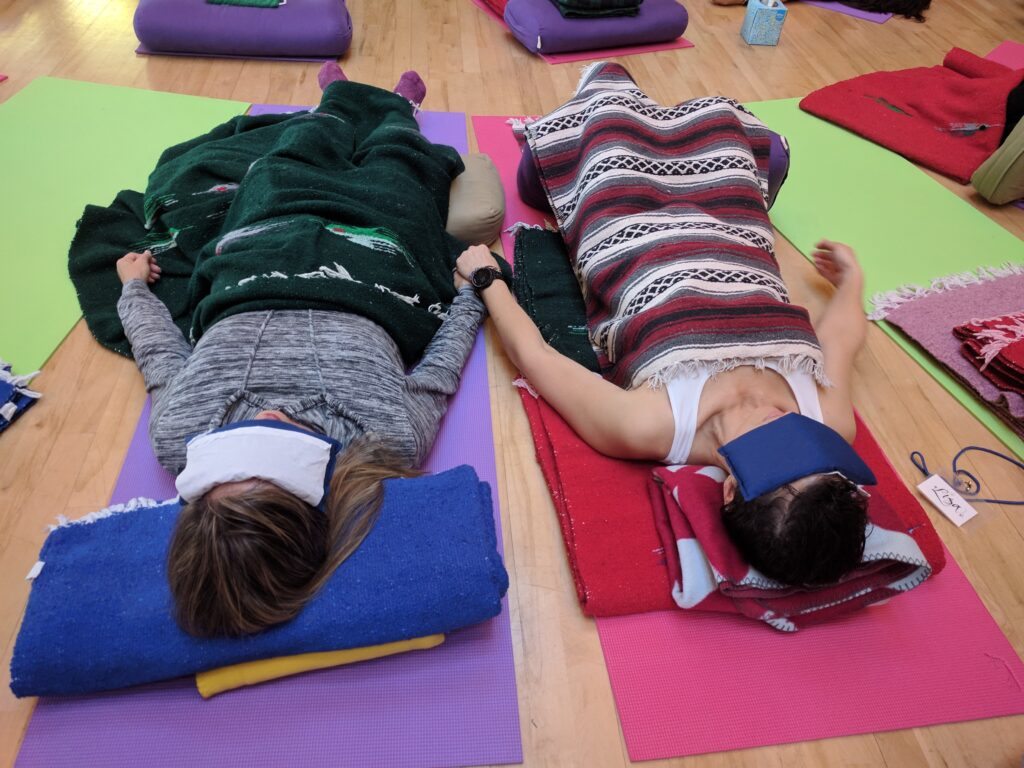
Retreat as a Lens, Not a Gate
Retreat is the most immersive expression of this way of being—but it is not the only one. These same values live across Cancer Lifeline’s classes, groups, and counseling spaces: the refusal to fix, the permission to be honest, the quiet power of being witnessed.
Not everyone can step away from their life for three days. And they should not have to in order to be met with dignity, presence, and care.
Retreat shows us what is possible. The spirit of retreat is carried everywhere.
What Comes Next
This reflection is Part One of Out of the Cave: Reflections on Healing, Presence, and the Human Experience of Cancer. In the pieces that follow, Dr. Whitten’s wisdom will guide us through:
- Living in uncertainty
- Intimacy in the face of mortality
- The conversations we avoid—and why they matter most
- Healing that exists even when cure does not
- Holding grief and vitality at the same time
- What caregivers learn beyond the clinic
- Carrying the circle into everyday life
Each piece is an invitation to step a little further into the light.
Further Reading & Resources
The themes in this reflection—presence, connection, uncertainty, and healing beyond cure—are echoed across medicine, psychology, and contemplative practice. Readers who wish to explore more deeply may find these works meaningful:
Foundational Texts
- Rachel Naomi Remen, Kitchen Table Wisdom
A classic in narrative medicine, exploring the human side of illness, presence, and meaning. Dr. Remen’s work mirrors the retreat ethic: listening without fixing, honoring the whole person, and allowing truth to be healing. - Jon Kabat-Zinn, Full Catastrophe Living
Introduces mindfulness as a way of meeting illness and uncertainty with awareness and compassion. Widely used in medical settings, this work grounds the idea that presence itself is a form of care. - Irvin D. Yalom, Staring at the Sun: Overcoming the Terror of Death
An exploration of how awareness of mortality can deepen vitality, connection, and authenticity—echoing Dr. Whitten’s insight that facing death can help us live more fully. - Atul Gawande, Being Mortal
A reflection on medicine’s limits and the human longing for dignity, meaning, and agency. This work aligns with retreat’s refusal to reduce people to diagnoses or outcomes. - Plato, Republic, Book VII – Allegory of the Cave
One of the most influential metaphors in Western thought about emerging from shadow into light. (Original philosophical source of the “cave” image inspiring this series.)
Clinical & Survivorship Resources
- National Cancer Institute – Psychosocial Support for People with Cancer
Affirms the role of emotional, social, and spiritual care alongside medical treatment. - American Society of Clinical Oncology (ASCO) – Survivorship Care Resources
Highlights survivorship as a whole-life experience, not merely a medical status. - Institute of Medicine, Cancer Care for the Whole Patient
A landmark report emphasizing that quality cancer care must address emotional and relational needs—not only physical ones.