

Part Three of Out of the Cave: Reflections on Healing, Presence, and the Human Experience of Cancer
Drawn from the wisdom of Dr. Cobie Whitten — inspired by Plato’s Allegory of the Cave
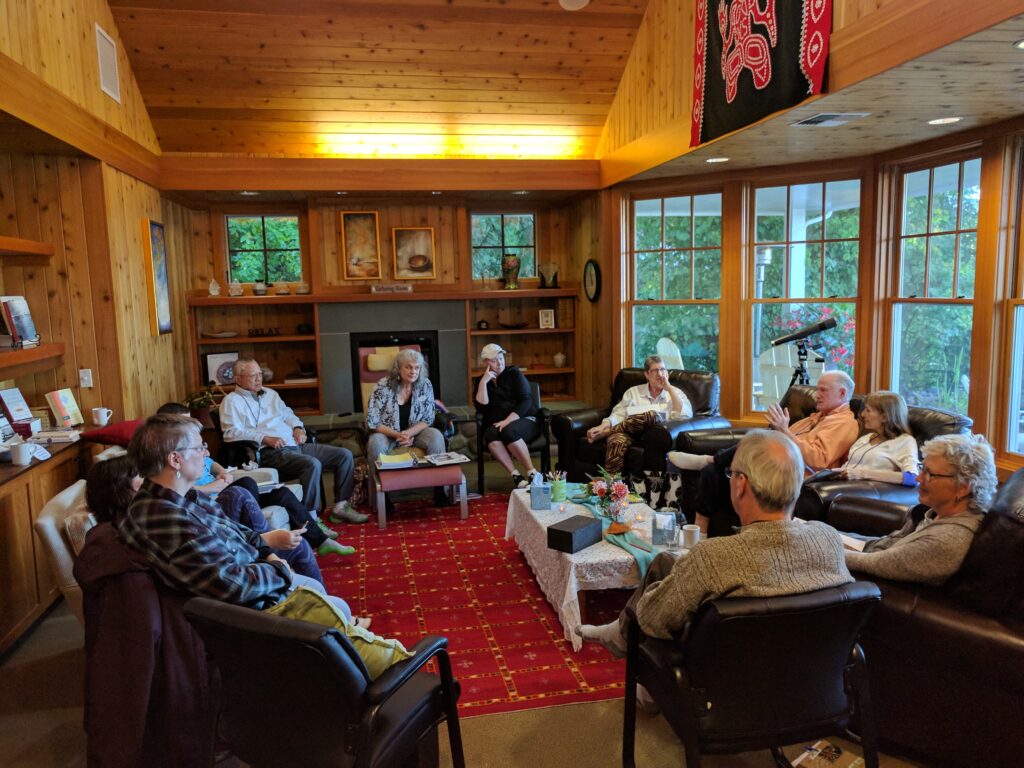
Within the retreat setting, there are certain conversations that arise with surprising consistency.
Not because anyone insists upon them, but because once participants are invited to let go of obligation, productivity, and performance — once they are no longer required to reassure others that they are “doing okay” — the questions that matter most tend to surface on their own.
Questions about intimacy.
About legacy.
About unfinished conversations.
About how to live alongside a future that no longer feels predictable.
Dr. Dr. Cobie Whitten describes a pattern she has observed across decades of retreat work. In the presence of serious illness, many people begin to engage in what she calls protective buffering: avoiding difficult topics out of the belief that they are protecting the people they love.
They may avoid speaking honestly about sexuality, even when treatment has changed their relationship to their own body. They may put off conversations about wills, financial planning, or health care decision-making. They may choose not to name tensions within relationships for fear of adding burden to an already frightening time.
The intention is care.
But the impact can be distance.
However, protective buffering can have unintended consequences. By avoiding difficult topics, individuals may inhibit opportunities for closeness. Silence may create distance in relationships that would otherwise benefit from open acknowledgment.
Within retreat, participants are invited to address what they can in the present moment. This may include practical matters such as preparing legal documents or clarifying financial arrangements. It may also involve reflecting on relationships and identifying what feels unresolved.
Dr. Whitten frequently uses the phrase “cross the T’s and dot the I’s” to describe the process of completing available tasks or decisions so that attention can return to living. She also references the expression, “Name it to tame it,” acknowledging that naming an issue can reduce its intensity even if it cannot be resolved immediately.
Research indicates that individuals living with cancer often report feelings of isolation regardless of the level of support they receive. Changes related to treatment may affect sexuality or physical comfort, and discussions of these changes are not consistently initiated in clinical care.
Nevertheless, the need for physical connection remains. Touch — whether through sexual intimacy, affectionate contact, or therapeutic intervention — may reduce feelings of isolation and support emotional well-being.
Retreat settings provide an opportunity to address these topics within a supportive environment. Survivorship, in this context, is not defined by vigilance alone. It includes the opportunity to define how one wishes to live in the presence of illness or uncertainty.
Participants are invited to consider what matters most and how they wish to engage with others in their daily lives.
Further Reading & Resources
The themes in this reflection—presence, connection, uncertainty, and healing beyond cure—are echoed across medicine, psychology, and contemplative practice. Readers who wish to explore more deeply may find these works meaningful:
Foundational Texts
-
- Rachel Naomi Remen, Kitchen Table Wisdom
A classic in narrative medicine, exploring the human side of illness, presence, and meaning. Dr. Remen’s work mirrors the retreat ethic: listening without fixing, honoring the whole person, and allowing truth to be healing.
- Rachel Naomi Remen, Kitchen Table Wisdom
-
- Jon Kabat-Zinn, Full Catastrophe Living
Introduces mindfulness as a way of meeting illness and uncertainty with awareness and compassion. Widely used in medical settings, this work grounds the idea that presence itself is a form of care.
- Jon Kabat-Zinn, Full Catastrophe Living
-
- Irvin D. Yalom, Staring at the Sun: Overcoming the Terror of Death
An exploration of how awareness of mortality can deepen vitality, connection, and authenticity—echoing Dr. Whitten’s insight that facing death can help us live more fully.
- Irvin D. Yalom, Staring at the Sun: Overcoming the Terror of Death
-
- Atul Gawande, Being Mortal
A reflection on medicine’s limits and the human longing for dignity, meaning, and agency. This work aligns with retreat’s refusal to reduce people to diagnoses or outcomes.
- Atul Gawande, Being Mortal
-
- Plato, Republic, Book VII – Allegory of the Cave
One of the most influential metaphors in Western thought about emerging from shadow into light. (Original philosophical source of the “cave” image inspiring this series.)
- Plato, Republic, Book VII – Allegory of the Cave
Clinical & Survivorship Resources
-
- National Cancer Institute – Psychosocial Support for People with Cancer
Affirms the role of emotional, social, and spiritual care alongside medical treatment.
- National Cancer Institute – Psychosocial Support for People with Cancer
-
- American Society of Clinical Oncology (ASCO) – Survivorship Care Resources
Highlights survivorship as a whole-life experience, not merely a medical status.
- American Society of Clinical Oncology (ASCO) – Survivorship Care Resources
-
- Institute of Medicine, Cancer Care for the Whole Patient
A landmark report emphasizing that quality cancer care must address emotional and relational needs—not only physical ones.
- Institute of Medicine, Cancer Care for the Whole Patient